Myth-Busting: Self-care and parent carers
Realistic strategies to look after your own wellbeing, by Dr Joanna Griffin
Even when we know that we need to take care of ourselves, parent carers often don’t know how, or don’t feel that they have time, to put in place strategies that may help.
In this article, Dr Joanna Griffin, a parent carer and Counselling Psychologist challenges some myths and suggests some easy strategies to help. Some may resonate with you and be realistic for your life more than others – try a few out and see what works for you!
 Myth 1: ‘It is selfish to think of your own needs as a parent carer’
It is sad that we still need to challenge this myth but it does seem that parent carers carry a lot of guilt about thinking of themselves.
If it’s any help then a reminder that parent carers are at risk of poorer mental health, not because we have some internal failing but because of external events that are often out of our control. Lack of support, fighting for limited resources, seeing our child struggle or experience discrimination – all can take their toll on our wellbeing.
If you had a friend in the same situation as you would you think it was selfish for them to think about their own mental wellbeing? Hopefully, you can treat yourself with the same care you would a good friend. There is a meditation on self-care for caregivers here.
Myth 2: ‘I don’t have time for self-care’
Although the term ‘self-care’ often conjures up images of a day off or a visit to the spa this isn’t always realistic for parent carers (if it is – then grab the chance and go without guilt).
Micro-moments of self-care can be very effective, and we are more likely to stick to them if they are possible to integrate into our daily lives.
Looking after yourself may include taking a moment in the bathroom when things become overwhelming. Putting your hand on your chest and noticing your breath move in and out. It may involve recognising that your stress levels are rising and taking time to walk around the block while you re-group.
In the same way that our children need to feel safe and calm before they can effectively problem-solve, we also need to regulate our emotions to prevent us from getting caught up in the overwhelm of parenting.
Here are some ideas for when you have limited time:
1 minute
- Hug your child or a pet.
- Congratulate yourself on something well done (even doing the washing up, or getting up on time).
- Light a candle and take a moment to breathe
5 minutes
- Listen to a favourite song or piece of music
- Paint your nails
- Write in a journal about how you are feeling or something you want to do in the future
30 minutes
- Talk to a friend
- Sit down and read a magazine with a cup of tea in a special cup
- Listen to a podcast
Myth 3: ‘Self-care activities involve yet another ‘to-do’ list’
If at times doing ‘self-care’ can feel like another thing on your to-do list then maybe it’s time to shake it up a bit. Find ways to build good habits in your daily life that are less onerous and provide yourself with cues and support to remind you.
 As we’ve already noted you can start small, build it into the everyday, ensure it’s something personal to you (that you’ve chosen, not because you think you ought to like it) and make it manageable. Notice if you have any negative thoughts, such as ‘this is self-indulgent’ or ‘I don’t have time for this’ and gently challenge these beliefs. You are worth making the effort for.
Ways to make self-care part of your life include:
- Set a timer on your phone for when you’ll do 5 minutes of a mindfulness app.
- Habit stack – build a good habit on something you already do. For example, think of 3 things you’re grateful for while you’re brushing your teeth. Massage your jaw or arms while in the shower. Swap over your coffee for green tea or other alternative.
- Use nice-smelling hand cream and really savour the act of rubbing it into your hands.
- Listen to music while washing up.
- Have healthy food options around you – swap snacks for a bowl of juicy fruit or move the TV remote away and leave a book nearby
- To help remind yourself you can create a self-care box that you can access when you need. For example, create a box or shelf in your home with visual cues to remind you to pause and think of your own needs. This may be quote/art, photos, a nice-smelling air freshener or diffuser, or a comfy cushion. Sometimes a picture on the fridge door may be enough to make you pause and reflect.
At times self-care isn’t about doing more it’s actually about doing less. Learning to say no or delegating to others can protect your precious time.
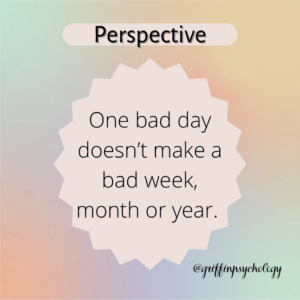
Changing your perspective on things can also have a significant impact. Avoiding cognitive biases, such as catastrophising or all-or-nothing thinking can help. For example, if you have a tendency to self-criticise after a mistake you might fall into unhelpful thinking that everything is terrible. Instead, remember that one mistake does not remove all the successes in your life; one bad day doesn’t make a bad week.
Myth 4: ‘Feeling ‘on edge’ is just part of being a parent carer’
Although feeling constantly worry-stressed is a reality for many parent carers it doesn’t mean that it has to be like this. Sometimes we can become so used to feeling stressed that we start to think of it as normal.
I’m reminded of the boiling frog analogy.
The boiling frog is a fable describing a frog being slowly boiled alive.
The premise is that if a frog is put suddenly into boiling water, it will jump out, but if the frog is put in tepid water which is then brought to a boil slowly, it will not perceive the danger and will be cooked to death.
The story is often used as a metaphor for the inability of people to react to or be aware of threats that arise gradually rather than suddenly.
In relation to parent carers what this might mean is that we don’t notice when things are becoming overwhelming. Rather than building in daily activities that replenish us, we only think about ourselves when things have reached a crisis point.
There are practical everyday steps which can prevent the build-up of stress. These include:
- Getting enough sleep – lack of sleep affects every aspect of life and it can also affect how we relate to those around us. Ensure your bedroom is a peaceful space – no devices, low lighting, quiet and comfortable. Don’t scroll on your phone before bed – try a book or relaxing body scan instead. Click here to try a 10 minute body scan meditation, or here for a 30 minutes one.
- Even moving your position, stretching, and thinking about your posture – can all affect how we all feel. Our mind and body are connected, each influencing one another. There’s some useful info here.
- Eat well. Often we’re solely focused on what our children are eating, surviving on coffee or the children’s leftovers but we deserve the same care and nurturing. There are useful tips about building in the ‘good stuff’ here.
- Get out in nature. It’s shown to be beneficial to our physical and mental wellbeing to spend time outdoors, every day.
- Moderate your caffeine/alcohol intake. Although we may think they help manage our stress, both can increase anxiety and sleep problems.
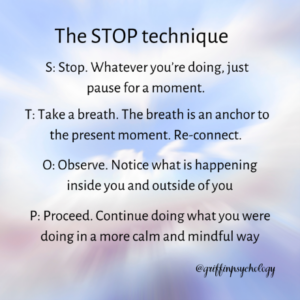
We can learn skills to use when we notice our stress levels increase. The STOP technique is a useful strategy:
S: Stop. Whatever you’re doing, just pause for a moment.
T: Take a breath. The breath is an anchor to the present moment. Re-connect with your breath.
O: Observe. Notice what is happening inside you and outside of you.
P: Proceed. Continue doing what you were doing in a more calm and mindful way.
A final tip is to be self-compassionate with yourself. We all feel overwhelmed at times, and we all make mistakes. Recognising that we’re only human and trying to do our best can help prevent unrealistic expectations.
Being good enough is enough.
Burnout
Sometimes parent carers suffer from burnout and need help from external sources. Connecting with other parent carers can be helpful, such as on the WellChild Family Tree community. You can speak to your GP or mental health professional.
The website www.affinityhub.uk signposts emotional support for parent carers. You can also read further information on burnout here.
Further Information
Joanna’s book, Day by Day: Emotional Wellbeing in Parents of Disabled Children was published in 2021. The book can be ordered here or here. For free worldwide delivery please click here.
If you would like a copy of the Wellbeing worksheet from the book please email [email protected]
Please visit Joanna’s website for further information www.affinityhub.uk.
If you have any comments, ideas, or suggestions about this article please contact us at [email protected]
Please don’t forget to leave feedback on this article!
Author: Dr Joanna Griffin, Counselling Psychologist
Editor: Kathy Gibson, Digital Information Officer
First published: October 2023
Next review due: October 2024